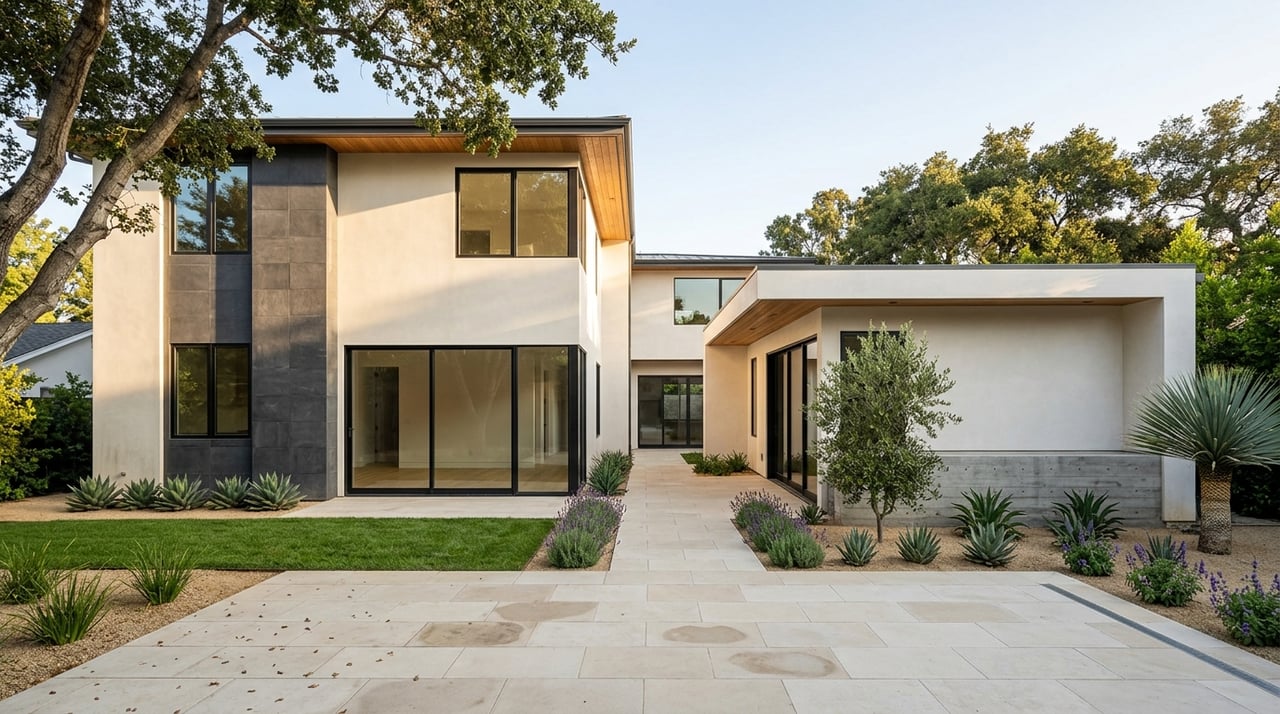
Exploring ADU Potential On Calabasas Properties
July 9, 2026
July 9, 2026
Thinking about adding an ADU in Calabasas? The opportunity can be exciting, but the real answer is rarely as simple as “yes” or “no.” If you own a property here, or you are considering buying one for future flexibility, income support, or added living space, it helps to understand how Calabasas approaches ADUs before you make plans. This guide walks you through the key rules, the local approval paths, and the property-specific factors that often shape whether a project makes sense. Let’s dive in.
In California, accessory dwelling units, often called ADUs, have become an important housing option. They can create independent living space on the same parcel as a primary home, and they are commonly used for extended family, guests, or long-term rental housing.
In Calabasas, the conversation is especially interesting because the city offers a pre-approved ADU plan program. According to the city, there are three plan sets available online at no cost, including a studio, a one-bedroom layout, and a two-bedroom layout, with multiple exterior styles. These plans are pre-reviewed and code-compliant, which can help reduce pre-construction fees and shorten the review process.
That means ADU potential in Calabasas is less about broad theory and more about the details of your specific property. Zoning, overlay areas, existing structures, parking, utility setup, and whether a pre-approved plan fits your lot all play a major role.
Calabasas defines an ADU as an attached or detached residential unit with complete independent living facilities. That includes areas for living, sleeping, eating, cooking, and sanitation, all on the same parcel as the main home.
The city also allows junior accessory dwelling units, or JADUs. A JADU must be contained within the walls of a single-family residence, may be created within an attached garage, and is limited to one per single-family lot.
For homeowners and buyers, this distinction matters because an ADU and a JADU follow different size and design limits. If you are evaluating a property for future use, knowing which category may apply can save time early in the process.
One of the first questions most owners ask is how much space they can actually build. In Calabasas, detached ADUs are capped at 1,200 square feet and limited to one story with a maximum height of 16 feet.
Attached ADUs are limited to the lesser of 1,200 square feet or 50% of the primary home's living area. JADUs are capped at 500 square feet.
Setbacks are another major factor. The city code shows a 4-foot minimum side and rear setback for many detached ADU situations. If you are converting an existing legal garage or another existing structure, some setback issues may be less restrictive, which can make a conversion path more practical on certain lots.
Parking can shape ADU feasibility, but Calabasas does not treat every project the same way. The city code indicates one additional off-street parking space above the primary dwelling’s requirement in many cases.
At the same time, exemptions may apply. The code notes exceptions when the ADU is within one-half mile of transit, within a city-designated historic district, part of an existing legal primary residence or accessory structure, or near an eligible car-share facility.
The city also allows tandem parking and mechanical lifts. For some parcels, that flexibility can make the difference between a workable project and one that becomes difficult on paper.
If you are exploring ADU potential for income or future value, it is important to understand how Calabasas limits use. The city code says an ADU may not be sold separately from the primary dwelling.
The code also says an ADU may be rented, but it may not be used as a short-term or transient rental for less than 30 days when compensation is involved. In practical terms, that points owners toward long-term housing use rather than a vacation-rental strategy.
For many buyers and sellers, the strongest value story is flexibility. An ADU can support multigenerational living, guest space, a private work area, or long-term rental income, but not separate resale or short-term rental operation.
Calabasas offers two basic routes for ADU projects: pre-approved plans and custom plans. Each can work well, but the right path depends on the site and your goals.
The city’s pre-approved plans are designed to simplify the process. Because they are already reviewed for code compliance, they can reduce friction before construction begins.
If your lot can accommodate one of the city’s standard layouts and you want a more streamlined path, this option may save time and reduce some early planning costs. It can be especially attractive for owners who want predictability.
Custom plans are often the better fit if your property has unusual dimensions, slope, placement challenges, or if you want to convert existing space. The city says custom plans must be prepared by a licensed California design professional and must comply with city and state requirements.
This route may involve more design and documentation up front, but it can also create a better fit for the property. For some Calabasas lots, especially those with unique constraints, customization is not a luxury. It is the realistic path.
For projects with exterior work, Calabasas says the first step is usually Zoning Clearance through the Planning Department. From there, permit applications and plan submittals are handled electronically through the city’s portal.
The city also notes that it does not issue expedited permits, and review happens in the order applications are received. That makes complete and accurate plans especially important from the start.
According to the city’s building and safety guidance, larger projects such as ADUs, additions, and alterations require complete plans and formal review before work begins. If revisions are needed, those must be resubmitted before approval and inspections follow later in the process.
Even when a parcel looks promising, a few Calabasas-specific factors can change the picture quickly. This is why serious ADU analysis should always be site-specific.
In the Old Topanga and Calabasas Highlands overlay zones, ADU additions or freestanding structures must comply with zoning code standards tied to those areas. If a property sits within one of these overlays, the project may need closer review.
If you plan to convert an existing structure, permit history matters. Calabasas says that when a structure has no record of a building permit, the city requires a safety inspection by the building official and fire department before approval, along with a commitment to bring the structure up to health and safety standards.
This is a major point for both owners and buyers. A detached garage or backyard structure may look like an ADU opportunity, but the real question is whether it is legal and feasible to convert under current standards.
ADU economics are never just about construction cost. Fees, utility treatment, and the project path all affect the overall budget.
Calabasas says an ADU application must be submitted with the appropriate fee set by city council resolution. The city also states that it will not treat an ADU or JADU as a new residential use for connection fees or capacity charges unless the unit is built with a new single-family or multifamily dwelling.
State guidance from California HCD further explains that impact fees cannot be imposed on ADUs under 750 square feet or on JADUs. For larger ADUs, fees may be charged on a proportionate basis tied to floor area.
For owners trying to estimate return on investment, this is why a generic budget template is rarely enough. The true cost picture depends on unit size, whether you are using a pre-approved plan, utility conditions, and whether an existing structure needs substantial corrective work.
An ADU can add meaningful utility to a property, but only if it is properly permitted and inspected. Calabasas warns that unpermitted work can create problems at the time of sale.
The city also notes that many lenders will not fund a purchase when a home includes non-permitted construction. That makes legal status more than a paperwork issue. It can affect marketability, financing, and buyer confidence.
If you are buying with ADU upside in mind, or selling a home with an existing secondary structure, this is one of the first details worth verifying. A clean permit path is often far more valuable than a questionable conversion that looks finished.
If you want to think strategically about ADU potential in Calabasas, start with the property and not the idea. A strong review usually includes:
This kind of analysis is useful whether you already own the home or you are comparing purchase opportunities. In Calabasas, ADU value is often created by choosing the right property and understanding the constraints early.
If you are looking at homes through an owner-user or investor lens, ADU potential should be part of the conversation before you write an offer, not after closing. That can help you avoid expensive assumptions and focus on opportunities that align with the city’s actual rules.
When you want local guidance on buying or selling in Calabasas with ADU potential in mind, Two Lights Media Inc. can help you think through the tradeoffs, the property fit, and the bigger resale picture with a clear strategy.

Woodland Hills Homes
Quiet Suburb or Bustling Valley Hub?
First Time Home Buyers
Chalenges and Opportunities'

The average 30-year fixed mortgage rate is hovering around 6.30% to 6.40% nationally.
Connect with a real estate professional who values trust, insight, and personal attention. Every step is guided by a deep understanding of what “home” truly means.